
HB 1497 Would Open My Safe Florida Condominium Grants Statewide, With a New Income Test
A House panel voted 15-0 to expand the condo hurricane mitigation grant program beyond the coast, limited to buildings where most occupants earn 80% of AMI or less.
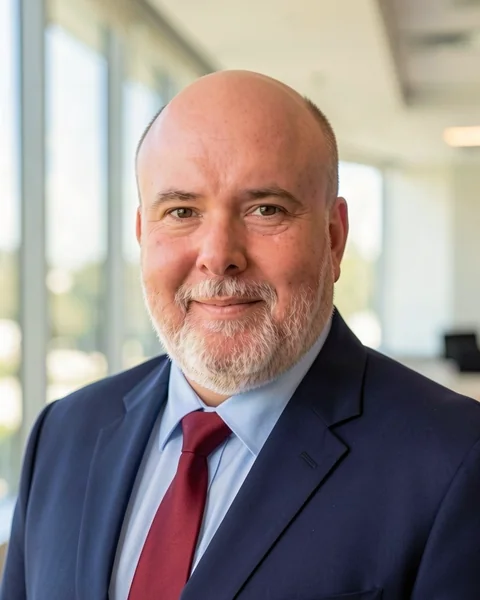 Tony RocaAttorney and certified mediator

Hurricane hardening is one of the costs driving condominium special assessments in Florida, and a state grant program meant to help has so far been available only near the coast. On January 29, 2026, the Florida House Housing, Agriculture & Tourism Subcommittee approved a committee substitute for HB 1497, which would open the My Safe Florida Condominium Pilot Program to condominiums anywhere in the state while limiting it to lower-income buildings 2. The vote was 15 to 0, according to the staff analysis released the next day 1.
How the program works now
The Legislature created the program within the Department of Financial Services in 2024 with a nonrecurring appropriation of $30 million 1. It provides free inspections and grant funding for wind mitigation improvements, which may also lower wind insurance premiums 1. Participation is currently limited to condominiums within 15 miles of a coastline 1.
Grants require a match of $1 from the association for every $2 from the state, and the total award may not exceed $175,000 per association 1. Eligible improvements include opening protection (exterior doors, garage doors, windows and skylights) and roof improvements 1. Buildings must be three or more stories, and an association may not apply unless it has complied with milestone inspection and structural integrity reserve requirements 1. The windows must also be common elements under the declaration 1.
Demand has outpaced the money. The first application portal opened on November 14, 2024, and closed within five days due to funding capacity 1. A second round that opened on August 18, 2025, closed within one hour 1. As of January 2026, about 700 initial inspections had been completed across 206 associations, and 42 associations had been fully approved for grants 1.
What CS/HB 1497 would change
According to the House staff analysis, the bill would:
- Remove the coastal limit. Associations statewide could participate, not just those within 15 miles of a coastline 1.
- Add an income test. Only associations in which at least 80% of occupied units are owned or occupied by households earning at or below 80% of the area median income, as published by HUD for the county, would qualify 1.
- Require income verification. The department would adopt rules for verifying household income, such as owner self-certification, tax returns or income statements, and could require periodic recertification 1. Mixed-income buildings could participate if they meet the threshold 1.
- Focus grants on common elements. Grant funds could be awarded only for improvements to the common elements, and associations would have to complete all recommended opening protection improvements to the common elements as a condition of the grant 1.
The changes would apply only to applications submitted on or after July 1, 2026 1. Because the program depends on annual appropriations, an expansion would matter only if the Legislature funds it 1.
What this means for unit owners
For owners in older, lower-income buildings away from the coast, the bill could open a source of help that does not exist for them today. For owners in coastal buildings that do not meet the new income test, the bill would narrow eligibility for future applications 1. Either way, the association would still have to fund one dollar for every two state dollars, and grants are capped at $175,000 per association 1. In practice, an association’s share is money that ultimately comes from the owners.
Owners who are already behind on assessments should watch these developments but not count on a grant to solve the problem. Funding has been limited, the application windows have closed quickly, and the bill was still in committee as of this writing 12.
Condo owners in South Florida who are struggling with special assessments, association liens or other debt can request a confidential consultation with The Roca Law Firm to review their options.
Sources
- Bill Analysis, CS/HB 1497 (My Safe Florida Condominium Pilot Program), Housing, Agriculture & Tourism SubcommitteeFlorida House of RepresentativesJanuary 30, 2026
- Housing, Agriculture & Tourism Subcommittee, January 29, 2026, Meeting Bill Summary ReportFlorida House of RepresentativesJanuary 29, 2026
General information as of February 2, 2026, not legal advice for any particular situation. How articles are sourced and updated.
Get the weekly brief by email
New articles and updates from LexBrief Insights, once a week. Free, no spam, unsubscribe in one click.
You will get a confirmation email first. Email is handled by Kit; see the privacy notice. General information, not legal advice.
About the author
Tony Roca is an attorney licensed in Florida and Tennessee who represents individuals and families in Chapter 7 and Chapter 13 cases in the U.S. Bankruptcy Court for the Southern District of Florida, and a Florida Supreme Court Certified Circuit Civil and Family Mediator. His practice is at rocalaw.com.


