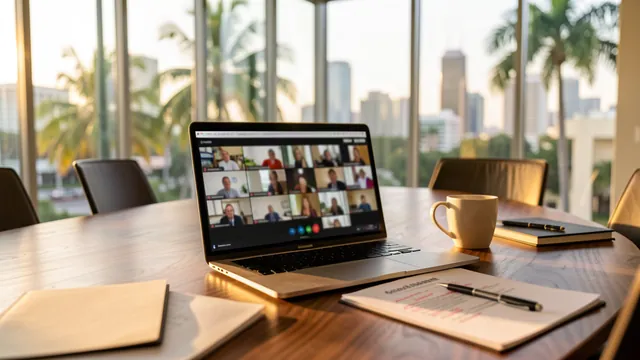
Florida Supreme Court Declines to Require Cameras On in Remote Mediation
The Court declined proposed Rule 1.700 amendments that would have required audio and video in remote mediations. What counsel should do instead.
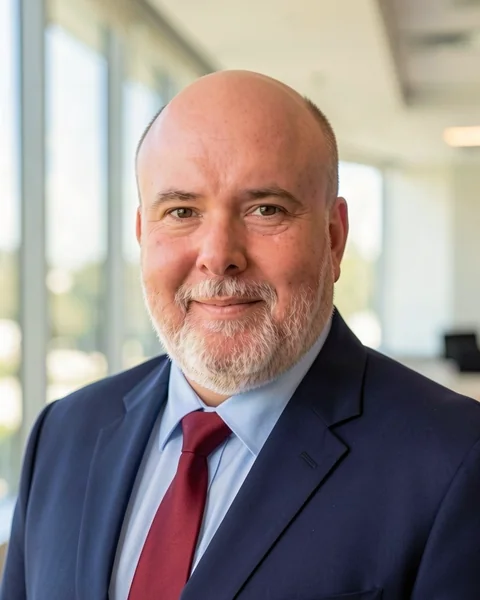 Tony RocaAttorney and certified mediator

On October 16, 2026, the Florida Supreme Court declined to adopt proposed amendments to Florida Rule of Civil Procedure 1.700 that would have required remote mediations and arbitrations to use both audio and video 1. In a brief disposition, the Court said that, having considered the proposal, the comments, the response to the comments and the oral argument, it “declines to adopt the proposed rule amendments,” and closed the case 1.
The decision leaves the current rule in place. For counsel, adjusters and parties who mediate by Zoom, it also leaves an unresolved practical question: what happens when a participant turns off the camera and goes silent?
What the proposal would have done
The Florida Bar’s Civil Procedure Rules Committee filed the proposal in Case No. SC2025-2041. As published for comment in March (covered in an earlier Insights article), the amended rule would have kept in-person mediation as the default, allowed the judge to order or the parties to stipulate to communication technology, and required that any remote session use both sound and picture “unless all parties stipulate or the judge finds cause” 3.
At oral argument on September 10, committee member Melisa Bodner told the justices that nearly every member of the committee had experienced a participant turning off the camera and muting during a mediation, and that mediators have little real control over a party who does so 2. She noted that the confidential nature of mediation prevents mediators from reporting that behavior to the court 2.
Why it drew opposition
Two groups opposed the amendment: the Supreme Court’s Committee on Alternative Dispute Resolution Rules and Policy and The Florida Bar’s Alternative Dispute Resolution Section 2. Their concerns, as reported by The Florida Bar News, included:
- Connectivity. Participants in rural areas often lack internet service that can reliably support simultaneous audio and video, and the programs warned the requirement could become a barrier to participation 2.
- Limited practical effect. Opponents argued that the rule would mostly affect opening statements, and that more participants now prefer to go directly into private caucus 2.
- Whether a rule is needed at all. Chief Justice John Couriel asked whether the issue had to be addressed by rule, and Justice Adam Tanenbaum questioned how the change would give mediators more authority than they already have 2.
The Florida Bar News also noted that the Bar’s 2022 best practices guidance for remote proceedings already states that cameras should be on and participants visible while conferring with the mediator, unless excused 2.
Practical takeaways for remote mediation
Because the Court did not adopt a statewide video requirement 1, the tools for managing participation are the ones that already exist:
- Address it in the order or stipulation. Current Rule 1.700 allows the referral order or the parties’ stipulation to provide for mediation through communication technology 3. Counsel who want cameras on throughout can propose that language when the mediation is scheduled.
- Confirm attendance expectations in advance. Identifying who will attend, from where, and on what device reduces disputes about whether a party with settlement authority is actually present.
- Plan for connectivity. For parties with limited broadband, a phone dial-in backup or a location with reliable service avoids losing time mid-session.
- Use caucus deliberately. If a participant disengages, a private session with that side is often the most direct way to find out why and to re-establish momentum.
Remote mediation remains the norm for much of Florida’s civil docket, and the Court’s decision 1 keeps flexibility in the hands of the parties and the mediator rather than a fixed rule.
Tony Roca, a Florida Supreme Court Certified Circuit Civil and Family Mediator with more than 4,000 mediations, conducts sessions by Zoom statewide. Counsel can check his live availability and book a mediation online.
Sources
- In Re: Amendments to Florida Rule of Civil Procedure 1.700, Case No. SC2025-2041 (disposition, declined)Supreme Court of Florida (ACIS docket)October 16, 2026
- Remote mediation rule draws concerns over cameras, connectivityThe Florida Bar NewsSeptember 11, 2026
- Proposed amendments to Rule of Civil Procedure 1.700 (Rules Common to Mediation and Arbitration)The Florida BarMarch 11, 2026
General information as of October 19, 2026, not legal advice for any particular situation. How articles are sourced and updated.
Get the weekly brief by email
New articles and updates from LexBrief Insights, once a week. Free, no spam, unsubscribe in one click.
You will get a confirmation email first. Email is handled by Kit; see the privacy notice. General information, not legal advice.
About the author
Tony Roca is an attorney licensed in Florida and Tennessee and a Florida Supreme Court Certified Circuit Civil and Family Mediator with more than 4,000 mediations, conducted by Zoom across Florida. His practice is at rocalaw.com.