The Fed Raises Rates in September 2026: What a Higher Cost of Borrowing Means for Florida Households
The Federal Reserve raised its benchmark rate to 3.75 to 4 percent as inflation stays above target. Here is how the increase reaches credit cards and loans.
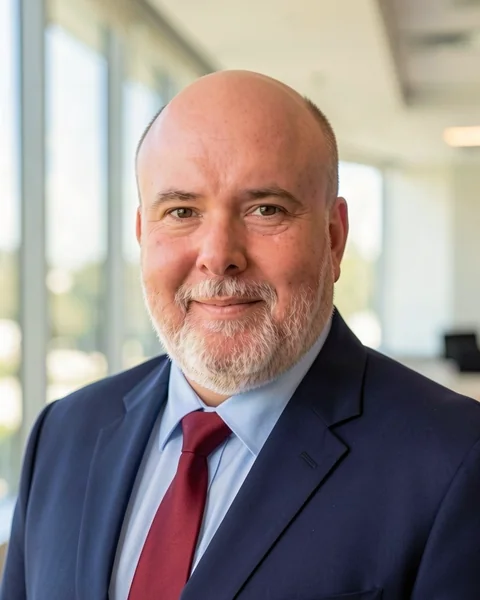 Tony RocaAttorney and certified mediator

On September 16, the Federal Reserve’s Federal Open Market Committee voted 12 to 0 to raise the target range for the federal funds rate by one quarter of a percentage point, to 3.75 to 4 percent 1. The Committee’s statement described growth as solid and joblessness as roughly flat, while noting that “inflation remains elevated,” and it described the increase as supporting a timelier return to its 2 percent goal 1.
For many households, the decision is less about monetary policy and more about the monthly statement. A higher federal funds rate tends to push up the rates on credit cards, home equity lines and other variable-rate debt.
Why the Fed moved
At his press conference, Chairman Kevin Warsh said inflation has been running above target for more than five years and that the summer’s readings did not show a meaningful improvement in underlying trends 2. He estimated that total PCE prices rose about 3.6 percent over the 12 months through August 2.
Consumer price data released days earlier pointed the same way. The Bureau of Labor Statistics reported that the Consumer Price Index rose 0.4 percent in August and 3.4 percent over the prior 12 months 3. Gasoline rose 3.9 percent in the month and accounted for more than one third of the overall increase, and the energy index was up 16.3 percent over the year 3. Food prices rose 2.7 percent over the year, and the shelter index rose 0.3 percent in August 3.
For a South Florida family that commutes by car and pays a high share of income toward housing, those categories matter more than the headline average.
How a rate increase reaches consumers
The federal funds rate is the rate banks charge one another overnight, but many consumer loans are tied to it indirectly:
- Credit cards. Most card agreements carry a variable rate linked to the prime rate, which generally moves with the federal funds rate. A quarter-point increase usually appears on balances within a billing cycle or two.
- Home equity lines of credit. HELOCs are typically variable, so payments can rise along with rates.
- Adjustable-rate mortgages and some personal loans. These reset on their own schedules but follow the same direction.
- Fixed-rate debt. Existing fixed-rate mortgages and most auto loans do not change, but new borrowing becomes more expensive.
A quarter point on its own is modest. The concern is the combination: higher interest on revolving balances arriving at the same time that fuel and other everyday costs are rising 3. The Fed’s statement also signaled that the Committee “will deliver price stability” 1, and Mr. Warsh described the standard for future action as confidence that underlying inflation is moving to the objective “clearly and at sufficient speed” 2, which leaves room for rates to stay higher for some time.
Practical steps for borrowers
Households carrying balances may want to review which debts are variable and which are fixed, contact card issuers about hardship programs before missing a payment, and avoid using new credit to cover recurring expenses. When minimum payments mostly cover interest, balances can stop going down even with steady payments.
For some people, the math no longer works. Bankruptcy is a legal process designed for that situation. Chapter 7 can eliminate qualifying unsecured debts such as credit cards, and Chapter 13 can consolidate debts into a court-supervised plan, often at a lower effective cost than continuing to carry high-rate balances. Whether either chapter is appropriate depends on income, assets and goals, and it is a decision best made with full information.
Anyone in South Florida concerned about rising payments can request a confidential consultation with The Roca Law Firm, in English or Spanish, to review the options.
Sources
- Federal Reserve issues FOMC statementBoard of Governors of the Federal Reserve SystemSeptember 16, 2026
- Transcript of Chairman Warsh's Press Conference, September 16, 2026Board of Governors of the Federal Reserve SystemSeptember 16, 2026
- Consumer Price Index - August 2026U.S. Bureau of Labor StatisticsSeptember 11, 2026
General information as of September 18, 2026, not legal advice for any particular situation. How articles are sourced and updated.
Get the weekly brief by email
New articles and updates from LexBrief Insights, once a week. Free, no spam, unsubscribe in one click.
You will get a confirmation email first. Email is handled by Kit; see the privacy notice. General information, not legal advice.
About the author
Tony Roca is an attorney licensed in Florida and Tennessee who represents individuals and families in Chapter 7 and Chapter 13 cases in the U.S. Bankruptcy Court for the Southern District of Florida, and a Florida Supreme Court Certified Circuit Civil and Family Mediator. His practice is at rocalaw.com.