Florida Supreme Court Settles What 'Culpable Negligence' Requires Under Section 784.05(1)
On Nov. 25 the Florida Supreme Court held that section 784.05(1) does not require conduct likely to cause death or great bodily harm, ending a district conflict.
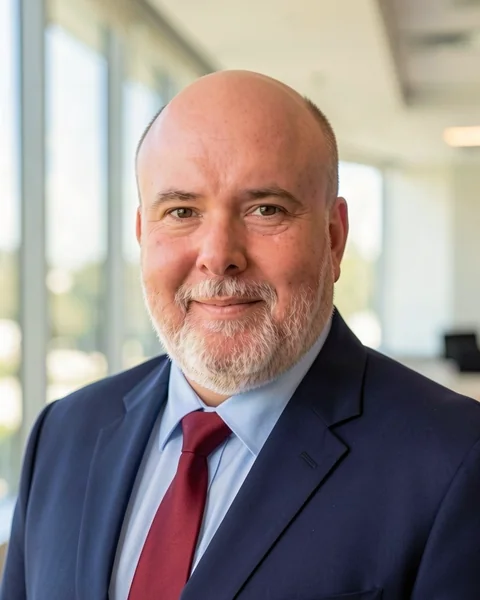 Tony RocaAttorney and certified mediator

A Miami-Dade eighth-grader spread deodorant gel on a classroom floor, and a teacher slipped. The case that followed ended on November 25 with a Florida Supreme Court opinion that answers a question lawyers had seen resolved three different ways in the district courts of appeal 1. The question was how much a prosecutor must show to prove “culpable negligence” under section 784.05(1), Florida Statutes.
The statute and the conflict
Section 784.05(1) makes it a second-degree misdemeanor when a person, “through culpable negligence, exposes another person to personal injury” 2. The Legislature did not define the phrase in that subsection, which left the courts to supply a standard.
Under the Third District’s reading in this case, the State had to show that the defendant exposed another person to injury through a course of conduct showing reckless disregard for the safety of others 1. The Second District, in J.C. v. State, and the First District, in Kish v. State, had reached the opposite result. Those courts required proof that the conduct was likely to cause death or great bodily harm 1. The direct conflict gave the Supreme Court jurisdiction to review the Third District’s decision at the request of the child, identified in the opinion as A.C. 1.
What the court held
The court agreed with the Third District, calling its holding faithful to the statutory text and to the Supreme Court’s 1977 decision in State v. Greene 1. The opinion reads the text of subsection (1) together with its history. Before 1974, section 784.05 reached only culpable negligence that actually inflicted injury, and the 1974 amendment added the separate offense of exposing a person to injury 12. That injury-inflicting offense remains in subsection (2) 1.
The court held that the “culpable negligence” element of subsection (1) does not require proof that the defendant’s conduct was likely to cause death or great bodily harm 1. It approved the Third District’s decision to the extent the decision is consistent with the opinion, and it disapproved J.C. and Kish to the extent they are inconsistent 1. It also declined to address how the Third District applied the Greene test to the facts of A.C.’s case 1.
What the opinion does not decide
Three limits matter for anyone reading the case for more than it says.
First, the holding concerns a criminal statute. The opinion does not purport to set a civil negligence standard, and nothing in it changes the elements of a negligence claim in a personal injury suit 1.
Second, the court left the fact-specific application alone. The trial court had found A.C. delinquent, withheld adjudication and issued a judicial warning, and the Supreme Court did not revisit whether the evidence met the Greene test 1.
Third, the decision is not final until the time to seek rehearing expires and any motion is resolved, as the opinion states on its face 1. Counsel citing the case should check its status before relying on it.
Why practitioners may care
Florida lawyers who handle claims arising from classroom, campus or workplace incidents sometimes see a criminal or delinquency matter run alongside a civil one. The statute’s reach affects what conduct can lead to a criminal charge, which in turn can shape settlement discussions, witness decisions and the timing of a mediation. Before this opinion, the standard a Miami-Dade prosecutor had to meet differed from the one that applied in the First and Second Districts 1. After it, the Third District’s lower threshold is the statewide rule for subsection (1), and the two older district decisions no longer control to the extent they conflict 1.
The opinion was unanimous. Chief Justice Couriel and Justices Labarga, Muñiz, Grosshans, Francis, Barrios and Tanenbaum concurred 1.
Parties in a dispute that overlaps with a pending criminal or juvenile case often need to sequence their mediation carefully. Counsel looking for a certified mediator, by Zoom statewide, can check Tony Roca’s live availability and book a mediation.
Sources
- A.C., etc. v. State of Florida, No. SC2025-0612Supreme Court of Florida (via Justia)November 25, 2026
- Section 784.05, Florida Statutes: Culpable negligenceFlorida Legislature, Online Sunshine
General information as of November 28, 2026, not legal advice for any particular situation. How articles are sourced and updated.
Get the weekly brief by email
New articles and updates, once a week.
You will get a confirmation email first. Email is handled by Kit; see the privacy notice. General information, not legal advice.
About the author
Tony Roca is an attorney licensed in Florida and Tennessee and a Florida Supreme Court Certified Circuit Civil and Family Mediator with more than 4,000 mediations, conducted by Zoom across Florida. His practice is at rocalaw.com.