Casablanca Miami Beach Heads Toward a December Termination Vote While an Owner Challenges the Voting Threshold
A Miami Beach condo-hotel plans a December termination vote, and a pending suit asks whether the association could lower the owner approval threshold.
 Tony RocaAttorney and certified mediator

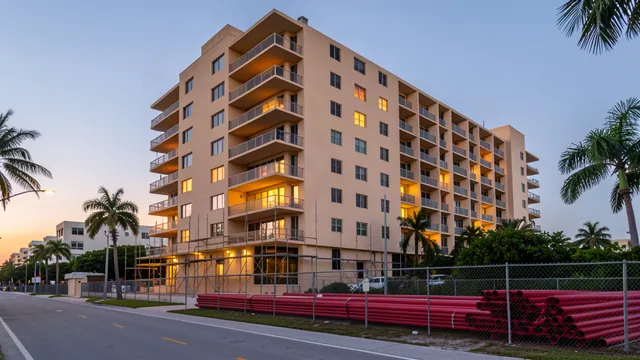
A 1948 oceanfront building at 6345 Collins Avenue in Miami Beach is the latest older South Florida property to move toward a condominium termination, and the way its governing documents were changed is now being tested in court.
What The Real Deal reported
According to The Real Deal, the Trump Group, run by Jules and Eddie Trump, now holds a controlling stake in the investor group pursuing the Casablanca condo-hotel buyout. The outlet notes that the company is not affiliated with President Donald Trump or his organization 1. The building has 357 residential and commercial units across ten stories, and many have been operated as short-term rentals 1.
Jules Trump told the publication that units are being refurbished and that the association will vote on a termination in December. Oren Shmueli, a Trump Group senior vice president, joined the board in September, according to state records cited in the report 1. Sagar Desai of Activate Hospitality, which assembled the buyout earlier in the year, remains involved and manages the hotel 1.
The challenge to the vote threshold
The legal question centers on who decides how many owners must say yes. The Real Deal reports that unit owner Karina Blanes sued the association in October. Her complaint alleges the association amended its condominium documents in May to lower the termination threshold from 100 percent to 95 percent, and that a September 30 meeting produced further amendments. Under the latter, termination for economic waste or impossibility could proceed with two-thirds of the vote, and optional termination with 95 percent 1. The complaint also states that the board said in September 2025 that the documents required unanimous approval 1.
The association’s attorney, Glen Waldman, disputes the claim. He told the publication that the Casablanca declaration is “nowhere near Biscayne 21’s” and that Blanes had signed a contract to sell her unit 1. Neither side’s account has been tested at trial, and the allegations are disputed.
The suit echoes the Biscayne 21 litigation in Edgewater. There, according to the same report, holdout owners won an appellate ruling that a developer-controlled association’s change to the voting threshold altered owners’ voting rights, and the developer later settled with them for $50 million 1.
What the statute sets as the baseline
Florida’s termination statute supplies the default rules. For an optional termination, a residential association’s plan needs approval from “at least 80 percent of the total voting interests” before it goes to the state division, but a plan cannot move forward if 5 percent or more of the voting interests reject it by negative vote or written objection 2. After such a rejection, a new plan cannot be considered for 24 months 2. A separate route exists for economic waste or impossibility, which turns on repair or compliance costs compared with the combined value of the units after the work 2.
Extra safeguards apply when one bulk owner controls 80 percent or more of the votes on the day the plan is recorded. In that case, the remaining owners must be paid no less than fair market value as fixed by an independent appraiser, owners claiming a homestead exemption get an added relocation sum equal to 1 percent of their share, and a resident owner can stay on as a tenant for a year if the units are later rented to the public 2. A real estate firm’s guide to these rules also stresses that a building’s declaration can control which vote requirements apply, so owners reading a termination plan should compare the statute with their own documents 3.
Why the details matter to owners and counsel
Several features of this dispute recur across older South Florida buildings: a declaration with a high original threshold, an association board that changes with an investor’s growing stake, and a pending vote on a fixed calendar. Disputes of this kind often turn on narrow questions, such as which version of the declaration applied when an amendment was adopted and whether the amendment altered a protected right. Those questions are for the court, and the Casablanca case has not been decided.
The report also lists separate pending claims against a related association over water intrusion at a townhouse unit, in which the owners say the association did not repair a roof 1. Mixed ownership, litigation on several fronts and an approaching vote can make resolution by negotiation more complicated, though it also gives parties reasons to consider a structured settlement conference before positions harden.
Counsel and parties dealing with condominium termination disputes who want a neutral to help narrow the issues can book a mediation with Tony Roca through his live availability.
Sources
- Acqualina developer Trump Group takes over Casablanca Miami Beach condo buyoutThe Real DealNovember 24, 2026
- Florida Statutes, section 718.117, Termination of condominiumFlorida Legislature, Online Sunshine
- Florida Condo Buyouts: What the Law Provides OwnersManhattanMiamiNovember 18, 2026
General information as of November 25, 2026, not legal advice for any particular situation. How articles are sourced and updated.
Get the weekly brief by email
New articles and updates, once a week.
You will get a confirmation email first. Email is handled by Kit; see the privacy notice. General information, not legal advice.
About the author
Tony Roca is an attorney licensed in Florida and Tennessee and a Florida Supreme Court Certified Circuit Civil and Family Mediator with more than 4,000 mediations, conducted by Zoom across Florida. His practice is at rocalaw.com.